



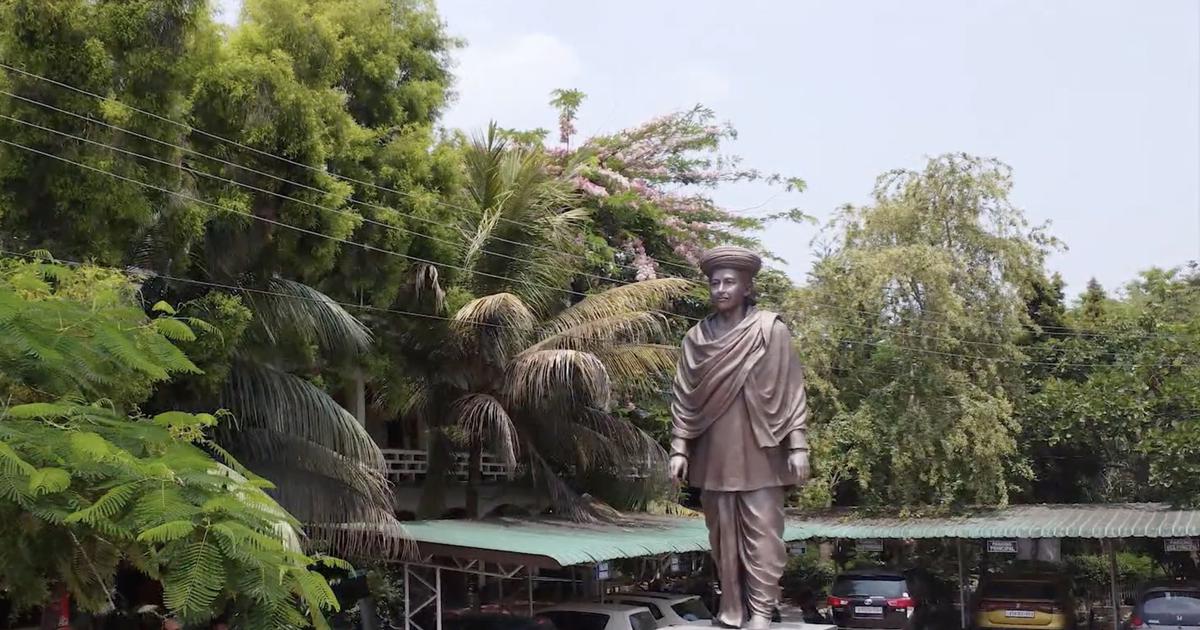
On 22 September 1829, Ananda Ram Phookan was born... His birth brought immense joy to his family, and his father, Haliram, spared no expense on donations and offerings. Ananda Ram was showered with love and affection, though little is remembered about his childhood antics. As a toddler, he did not behave like other children, even when his parents showed affection to other kids. On one occasion, his mother had to breastfeed his cousin Gangaram when the latter’s mother was experiencing breast pain, yet Ananda Ram did not throw a tantrum.
Overall, Ananda Ram was a chubby and healthy child. At times, he would be cross, but he always played joyfully with his sister and other boys. However, he rarely approached Haliram when he was home, as he was afraid of his father. Despite this, he was not afraid of interacting with others. Ranaram Barua loved him dearly, and Ananda Ram would often reach up to touch his bald head while sitting on his lap. Tragically, Ananda Ram was only three years old when his father passed away. Though he could not fully comprehend the loss, he cried several times upon seeing others in sorrow. As he grew, he cherished his father’s memory like a dream. His Churakaran ceremony had been performed while his father was still alive.
After his formal initiation into learning at the age of five, Ananda Ram began his education under the guidance of various teachers. One of them was Jashodhar from Umananda. After a while, he, along with his cousin Durgaram, learnt Sanskrit grammar, including Karika Ratnamala and Mugdhavodha, as well as conjugation. Gangaram, Ranaram’s son, and Balaram, Jagyaram’s youngest son, also joined in learning to read and write in Bengali. However, Ananda Ram’s progress was not as promising as it could have been. Jagyaram was very involved in their education.
In 1835, an English school and a Bengali school were established with the support of the government and the public. Jagyaram provided both financial support and enthusiasm for the project, as he was the most notable local figure and the only resident fluent in English. Ananda Ram and Durgaram were enrolled in the English school in 1837.
That year, Ranaram returned from Jorhat, where his youngest wife had given birth to a son named Gunabhiram. Ananda Ram was thrilled to see his uncle after such a long time. However, Ananda Ram’s mother was not pleased with Jagyaram following a disagreement and wished to move to one of their estates. Ranaram advised against this, as it would disrupt Ananda Ram’s education. Tragically, Ranaram passed away in May 1838.
Shortly after, in July, Jagyaram fell ill with a fever and moved to Captain Matthie’s bungalow for treatment and fresh air. When his condition worsened, he was brought back home, where he passed away that month.
Jagyaram was a serious man, skilled in several languages including Sanskrit, Bengali, English, Persian, Arabic, Bhutanese and Urdu. Trained by Raja Rammohan Roy, he adopted a progressive and refined approach towards religion and society. He treated the British as his equals and had close friendships with Captain Jenkins, the commissioner, and Captain James Matthie, the deputy commissioner. Before he passed away, Jagyaram asked Captain Matthie to take care of his house and children. He was briefly involved in elephant trading and even travelled to Mymensingh.127 There, he engaged in debates on various topics for days with a zamindar named Nabababu. At one point, he travelled to Dhaka for medical treatment. After Jagyaram’s death, his family was left without a guardian. Captain Matthie took them under his wing, overseeing their education and upbringing, while the staff managed the estates, businesses and annual rituals.
Ananda Ram was a dedicated student who never missed a day of school. He occasionally visited Matthie sahab, Jenkins sahab and Wilms sahab, who were close to the local community and deeply committed to its welfare. Their homes were always open and they generously provided students with books, papers, money and other necessities. The students had access to their elephants, horses, boats, buggies and gardens, and often went on outings to the park. Matthie sahab and Jenkins sahab organised these fun activities during pujas and other festivals. They even participated in the boys’ games, encouraging them to run, wrestle or climb trees for prizes. They created an environment that supported the physical, mental and moral development of the students. Ananda Ram flourished under their guidance and care.
Every day, Ananda Ram would wake up early, prepare for his lessons, bathe at home or in the Bharalu or Brahmaputra River and then head to school after having a quick breakfast. He had been riding horses and buggies since he was a young child. When he turned eleven, Durgaram performed his sacred thread ceremony; Durgaram’s own ceremony had already been performed by Krishnadev from the Teokiya Adhyapak clan. Ananda Ram’s stepsister Tuloshi married Raghudev Goswami, the eldest son of Chandrakanta Adhikari of Jakhalabandha Satra. The groom’s party camped on the Brahmaputra riverside and brought their palanquins and borjapis inside the Phukan campus, which caused some annoyance on our side. However, no complaints were made, as one should not find fault with guests. Jogeswar Goswami of North Guwahati sent a team to perform a farce using bows and arrows during the wedding.
After his sacred thread ceremony, Ananda Ram learnt to perform the Sandhya thrice a day, except on special occasions like the twelfth day of a fortnight, a shraddha ceremony or Sankranti. He preferred a thick and spotless sacred thread.
Ananda Ram was a stickler for daily rituals and cleanliness. He enjoyed playing games like Choupat and cards. He also played other games such as Bhotaguti, Hoi Gudu, Photikolai, Ghila and Latim, though he never got addicted. During Holi, like other boys, he would even throw colours at passers-by. Once, while playing Choupat with his friends Durgaram, Haranath and others, Haranath lost a game and ran away, babbling a nonsensical rhyme, which left Ananda Ram in stitches.
Many people still remembered the calamities they endured during the Burmese invasion. Ananda Ram, Durgaram, Balaram, Gangaram and their other friends occasionally fought mock war with bamboo, ikora or khagari bows and arrows, with one team role-playing the Burmese and the other, the British. They also enjoyed swimming in the river and picnicking on the riverbank during the winter. A five-day worship took place during Holi celebrations, and the entire family participated with great enthusiasm. This festival was filled with music, dance, concerts and fireworks, attracting both Marwaris and other gentlemen to join in the festivities, whether during the day or at night. Ananda Ram took part in the celebrations and thoroughly enjoyed the time spent with his family and guests. He was always polite to visitors and fascinated by folktales and stories from the past, a passion that began when he was a small child.
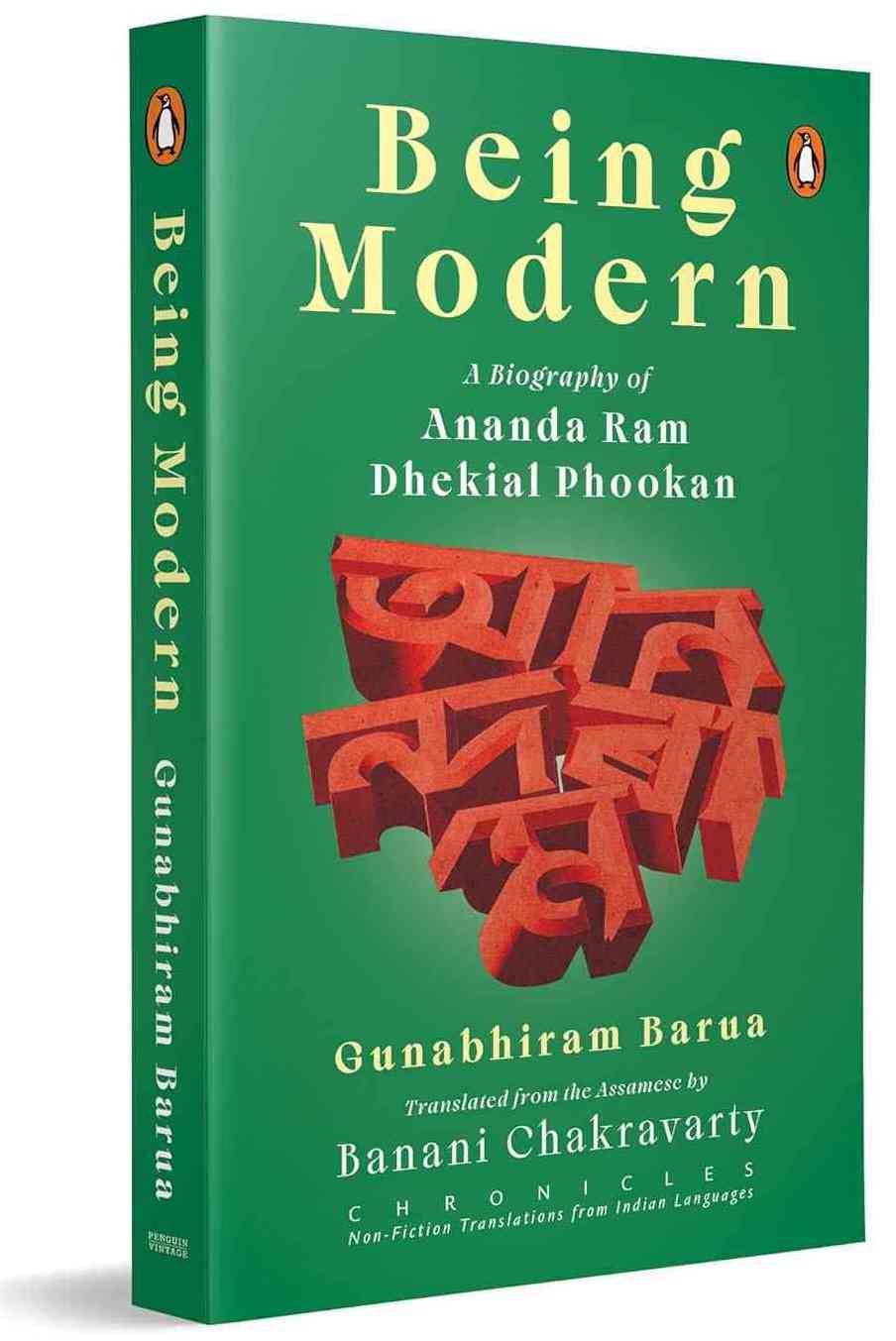
Excerpted with permission from Being Modern: A Biography of Ananda Ram Dhekial Phookan, Gunabhiram Barua, translated from the Assamese by Banani Chakravarty, Penguin India.
